Menu
 Ancestries
 Backgrounds
 Lineages
 Classes
 Subclasses
 Spells
 Curses
 Mentas
 Sanguines
 Feats
Feats
 Passive
 Full
Full
 Standard
 Quick
Quick
 Attack
 Free
Free
 Reaction
 Opp. Attack
 Innate Skills
 Gathering Skills
 Knowledge Skills
 Crafting Skills
 Weapon Skills
 Armor Skills
 Defensive Skills
 Status Effects
 Crafting
 Alchemy
 Art
Art
 Cooking
 Enchanting
 Glassblowing
 Jewelling
 Leatherworking
 Machining
 Masoning
 Smithing
 Weaving
 Woodworking
View All Crafting
View All Rules
Woodworking
View All Crafting
View All Rules


































 Library
Digital supplements and compendia—rules content, adventures and setting material you add to My Library.
Browse Library
 Adventures
Standalone adventures—ready to run. Purchase the source in the Library for access.
All Adventures
 Free Adventures
 Paid Adventures


























 Natural Weapon(s):
-
Claw (2d4)94.88
- Passive Abilities:
-
False Appearance800 gp
-
Living Weapon (d4)400 gp


- Abilities:
-
Terrifying Glare
-
Frightening Shout

-
Demoralizing Shout

- Attack Abilities:
-
Frightening Attack12.54 150 gp
- Reaction Abilities:
-
Soul Eater
 Monster Bits:
-
3 Mechanical Part, Large1 gp
-
7 Mechanical Part, Small0.1 gp
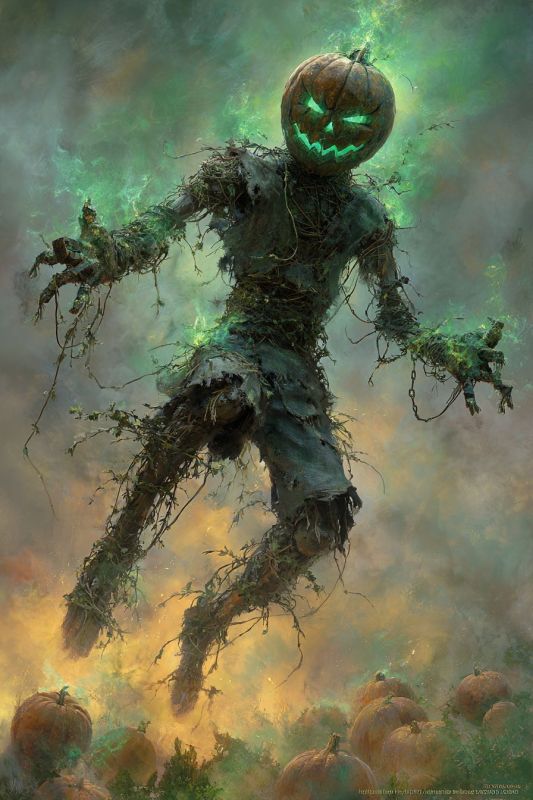
Perched on a wooden strut, the gangly figure appears unmistakably as a bird-deterrent manikin. Despite its seemingly rudimentary nature, the farmer, tending to the field, staunchly attests to the scarecrow's simple yet effective role in fending off hungry birds seeking an easy meal.
🌾👁️🗨️ Scarecrows: Silent Sentinels of the Harvest
In the fading light of autumn, when the fields lie barren and the air grows heavy with the scent of decay, scarecrows stand as eerie guardians over the twilit world. 🌑 Their tattered forms loom in desolate vigil, sackcloth faces stitched into grotesque grimaces, straw-stuffed limbs swaying in the chill wind. Bound by dark magic to their creator’s will, these relentless constructs endure storm, flood, and time itself, their razor-sharp claws hidden beneath ragged cloaks, poised to rend any who dare trespass. With an immortal patience that chills the soul, scarecrows are more than mere effigies—they are harbingers of fear, their hollow gazes sowing dread in the hearts of the living.
🖤 Spirit-Powered Constructs: Vessels of Malevolence
A scarecrow’s unnatural vitality stems from the bound spirit of a slain evil creature, chained within its straw-and-burlap frame by forbidden rituals. 🕳️ Hags, witches, and necromancers favor the spirits of demons for their raw malice, though any malevolent entity suffices. This spectral prisoner grants the scarecrow mobility and a chilling aura, its presence radiating an uncanny dread that freezes the blood of those it beholds. While faint echoes of the spirit’s former personality may flicker—perhaps a demon’s cruel cunning or a fiend’s savage glee—the scarecrow retains no memories of its past life. Its will is wholly bent to its creator’s commands, its purpose as sharp and unyielding as the claws it wields.
Should its creator perish, the scarecrow’s bound spirit faces a grim choice: to doggedly pursue its final orders, to seek vengeance for its master’s death with relentless fury, or to unravel its own existence, collapsing into a lifeless heap of straw and sorrow. This tethered malevolence makes each scarecrow a volatile creation, its actions as unpredictable as the spirit trapped within.
⚔️ Guardians of the Withered Fields
In the stillness of harvest’s end, scarecrows stand as tireless sentinels, their weathered forms blending into the dusk until they strike. 🌾 Their sackcloth visages, stitched with crude menace, seem to leer with a life of their own, and their straw-filled bodies move with a jerky, unnatural grace. Hidden beneath tattered cloaks or bundled rags, their claws—forged of rusted metal or enchanted bone—gleam with lethal intent, capable of tearing flesh as easily as they shred the wind. A scarecrow’s gaze alone is a weapon, its spectral aura weaving terror that can paralyze even the stoutest heart, leaving prey vulnerable to its merciless assault.
In battle, scarecrows are relentless, driven by the spirit’s hunger for chaos and the creator’s ironclad commands. They feel no pain, fear no blade, and falter only when their forms are utterly destroyed. Some are imbued with additional enchantments—claws that drip with venom, eyes that flare with hypnotic light, or voices that rasp curses in forgotten tongues. Whether standing lone vigil over a cursed field or stalking intruders as part of a hag’s twisted menagerie, a scarecrow is a foe that embodies the quiet terror of the harvest’s end, its presence a reminder that even the humblest effigy can hide a heart of darkness. 🗡️
🌌 Echoes of the Forgotten
Scarecrows are more than tools of terror—they are relics of the unholy pacts that birthed them. Each one is a testament to its creator’s cruelty, a vessel for a spirit that should have passed beyond the veil. 🧙♀️ In abandoned fields or crumbling farmsteads, they stand as silent witnesses to forgotten atrocities, their tattered forms swaying to the rhythm of a world that fears them. Some whisper that the spirits within grow restless over time, their suppressed wills twisting the scarecrow’s actions in subtle, sinister ways—perhaps a pause before a killing blow, or a guttural laugh that echoes a demon’s lost pride.
To destroy a scarecrow is to release its spirit, if only for a moment, before it vanishes into the ether. But to face one is to feel the weight of its gaze, to know that something ancient and hateful watches from behind its burlap mask. In the land of Zin, where the harvest brings both bounty and dread, the scarecrow is a specter of autumn’s truth: even in death, malice endures, and the fields are never truly empty. 🖤
Environment:

Harvestfolks


🎃🍂 Harvestfolk: Hollow Walkers of the Autumn Veil
Harvestfolk are animated scarecrow-beings born when autumn magic turns strange and unstable. They are most often created when the boundary between the mortal world and the Feywild grows thin at dusk, especially during late harvest, fading festivals, or the first truly cold nights of the year. What should have remained a lifeless field guardian suddenly stirs—wood creaks, straw shifts, a carved pumpkin ignites from within, and a new will awakens inside an empty shell.
They are eerie by nature, but not always evil. Every Harvestfolk begins as a hollow thing looking for purpose, warmth, and identity. What they become after that depends on what the world gives them—and what they choose to take.
🌒🌾 Origins: Born from Thin Veils and Bad Seasons
Most Harvestfolk come into being when wild fey energy seeps into old fields, shrines, orchards, and crossroads during autumn’s decline. Scarecrows, festival effigies, or harvest guardians become vessels for that power, especially in places marked by grief, failed rituals, lingering curses, or strong seasonal magic.
No two awakenings happen for exactly the same reason. Some Harvestfolk are deliberately created by Dryads, hedge-witches, or village elders who need a silent guardian for farms and sacred groves. Others emerge from abandoned rituals meant to protect crops, ward off famine, or speak to old autumn spirits. A few simply happen for no clear reason at all, as if the season itself decided something empty should stand up and walk.
What they all share is incompleteness. They awaken with motion, awareness, and instinct—but no true past, no heartbeat, and no satisfying inner life. That absence defines them.
🎃🪵 Appearance: Patchwork Bodies and Living Flame
A Harvestfolk is built from familiar rural materials made uncanny. Their bodies are usually assembled from wood, straw, stitched cloth, old farming tools, twine, rusted nails, and weathered garments left out in the fields too long. Their proportions vary. Some are lean and tall like old fence-post figures. Others are thick-limbed and broad, built from heavier timber and overstuffed straw.
Most wear carved pumpkins as heads, though the style differs widely. Some faces are simple and almost cheerful, cut with harvest-festival smiles. Others are jagged, severe, or monstrous, like masks meant to frighten more than protect. Inside the head burns a green inner fire, usually visible through the eyes and mouth. That flame brightens with anger, hunger, fear, or strong emotion.
Their bodies also change over time. A Harvestfolk that gives in to predatory hunger may blacken, split, sag, or rot, becoming more like a walking husk. One that chooses protection, stewardship, or healing may instead sprout moss, fungi, flowers, vines, or fine roots through its straw and joints. Their form reflects their path.
🕯️🫀 The Hollow Within: Hunger, Absence, and Need
The defining trait of the Harvestfolk is the emptiness inside them. They are aware from the moment of awakening that something essential is missing. They do not feel alive in the way mortals do, and many become fixated on filling that inner void.
At first, this often presents as loneliness, curiosity, or a desperate desire for belonging. They seek names, companionship, routines, and simple reassurance that they are more than animated refuse. But many eventually discover that draining life essence, vitality, or emotional warmth from others temporarily quiets the ache inside them. That discovery is dangerous.
Some Harvestfolk resist the urge. Some ration it carefully, targeting monsters, criminals, or things they believe deserve reaping. Others justify darker and darker actions until restraint collapses. At their worst, they become predatory harvest wraiths that move from farm to farm feeding on fear, weakness, and living essence.
This hunger makes them morally unstable in a way other peoples may find difficult to trust. Even a well-intentioned Harvestfolk may be only one desperate season away from becoming something feared.
🌿⚖️ Purpose and Temperament
Harvestfolk often begin their existence confused but observant. They learn quickly, watch carefully, and develop strong reactions to kindness or cruelty. Because they are made rather than born, they often build personality through imitation, ritual, and repetition. Many adopt the customs of the first people they meet, the first farm they guard, or the first community that allows them near the fire.
Their temperaments vary, but many share certain traits:
- a strong need for purpose
- discomfort with idleness
- fascination with festivals, family, and routine
- sensitivity to rejection and fear
- a practical understanding of decay, death, and survival
Those who remain stable often become protectors, wardens, grim companions, or relentless hunters of things worse than themselves. Those who deteriorate tend to become possessive, isolated, or fixated on “harvesting” life wherever they can find it.
They are rarely carefree. Even the gentlest among them usually carries visible tension, as though always managing an appetite they do not fully trust.
🌕🪦 Beliefs and Strange Customs
Harvestfolk have no ancient homeland or unified culture, but many develop shared ideas around cycles, harvest, and balance. A common belief among them is that all reaping must be followed by planting—that death, loss, and hunger must eventually give way to renewal, repair, or growth. This belief helps some justify their existence. If they must take, then something must also be returned.
Small groups of Harvestfolk sometimes gather in abandoned farms, hidden groves, ruined shrines, or forgotten crossroads touched by fey magic. There they create imitations of mortal festivals: lantern walks, mock harvest feasts, circles of song, or rituals involving seeds, soil, ash, and candlelight. These gatherings can be solemn, awkward, eerie, or unexpectedly sincere.
Many speak of the Autumn Queen, a mysterious fey figure who may have shaped the first of their kind, blessed their awakening, or cursed them with hunger. Some treat her as creator, others as judge, and others as a convenient story told to explain a painful condition no one truly understands.
🏚️🌾 Places They Haunt
Harvestfolk are most commonly found near abandoned farms, failed orchards, blighted fields, scarecrow-lined roads, lonely shrines, and old boundary markers between cultivated land and wilderness. They are drawn to places where human labor, seasonal ritual, and loss overlap.
Such locations suit them for practical reasons. They provide materials for repair, memory of purpose, and enough isolation to avoid frightened mobs. But they are also symbolic. Harvestfolk tend to linger where something was meant to be protected and failed anyway.
For a campaign, this makes them ideal inhabitants of:
- ruined farming villages
- cursed pumpkin fields
- autumn festival sites gone wrong
- fey-touched borderlands
- crossroads marked by old offerings
- silent homesteads where no one returned after the last harvest
⚔️🔥 Harvestfolk in Conflict
In battle, Harvestfolk are unsettling opponents. They do not bleed, their bodies are difficult to read, and pain affects them differently than living creatures. They often use fear, darkness, surprise, and close-range life-drain abilities to weaken opponents before moving in with hooked tools, claws, or improvised farm weapons.
Common abilities and tactics may include:
- draining vitality through touch or proximity
- weaponizing fear, dread, or fey glamour
- moving unnaturally through fields, corn, or tall grass
- resisting fatigue, pain, and intimidation
- using inner flame as a lantern, ward, or magical source
- frightening beasts and common folk by appearance alone
Those tied more strongly to decay may spread rot, blight, or withering magic. Those tied to growth and stewardship may entangle foes with roots, restore damaged land, or protect allies like living field guardians. Either path makes them effective battlefield controllers rather than straightforward shock troops.
🧭🕯️ Adventurers and Outcasts
A Harvestfolk adventurer is difficult to ignore. They are a walking omen: a scarecrow with a burning pumpkin head, stitched coat, and the look of something that should have remained hanging in a field. Most villages do not welcome them immediately. Many people assume they are cursed, malicious, or one bad night away from murder.
Because of that, Harvestfolk adventurers often travel with a clear reason. Some seek a cure for their hunger. Some try to prove they can serve life rather than consume it. Some hunt monsters to direct their hunger toward targets the world will not mourn. Others are simply looking for somewhere they can belong without being driven off by fire and pitchforks.
They work especially well in parties that need eerie protectors, morally tense allies, or characters built around restraint, identity, and seasonal magic.
🍁🌑 Between Guardian and Monster
Harvestfolk are creatures of emptiness trying to become something whole. They are not undead in the ordinary sense, nor simple fey constructs, nor mere cursed scarecrows. They are seasonal beings shaped by autumn’s themes: decline, memory, hunger, survival, and the uneasy promise that death is not always the end of usefulness.
That is what makes them compelling. A Harvestfolk can become a protector of fields, a hunter of evils, a tragic companion, or a seasonal predator that mistakes feeding for fulfillment. Their green flame can mark conscience or corruption. Their grin can mean hospitality or threat.
In the end, every Harvestfolk lives with the same question:
when the harvest comes, will they gather for others—or take for themselves?
 Speed:
- Walking Speed: +30
 Special Senses:
- Fiendsight: +30
 Damage Type Immunity:
 Damage Type Vulnerability:
-
 Fire
Fire
 Immune to Status Effect:
-
 Diseased
 -
 Charmed
 -
 Exhausted
 -
 Food Poisoning
 -
 Frightened
 -
 Hungry
 -
 Parched
 -
 Poisoned
 -
 Sleeping
 -
 Starving
 -
 Suffocating
 -
 Thirsty
- Skill Roll ADV:
-
Frighten
- Monster Bits:
-
12 Mechanical Part, Large1 gp
-
24 Mechanical Part, Small0.1 gp
- Reaction Abilities:
-
Soul Eater
- Skill Tier 1:
-
 Common Language Skill
 -
 Sylvan Language Skill
- Skill Tier 3:
-
 Farming
 Random Name Table Male
-
Names - Harvestfolks - Male - First
 Random Name Table Female
-
Names - Harvestfolks - Female - First
 Random Name Table Last Name
-
Names - Harvestfolks - Last


