Menu
 Ancestries
 Backgrounds
 Lineages
 Classes
 Subclasses
 Spells
 Curses
 Mentas
 Sanguines
 Feats
Feats
 Passive
 Full
Full
 Standard
 Quick
Quick
 Attack
 Free
Free
 Reaction
 Opp. Attack
 Innate Skills
 Gathering Skills
 Knowledge Skills
 Crafting Skills
 Weapon Skills
 Armor Skills
 Defensive Skills
 Status Effects
 Crafting
 Alchemy
 Art
Art
 Brewing
 Calligraphy
 Cobbling
 Cooking
 Cosmetology
 Enchanting
 Glassblowing
 Jewelling
 Leatherworking
 Machining
 Masoning
 Milling
 Runeforging
 Smithing
 Tanning
 Weaving
 Woodworking
View All Crafting
View All Rules
Woodworking
View All Crafting
View All Rules





































 Inventory Equipped:
-
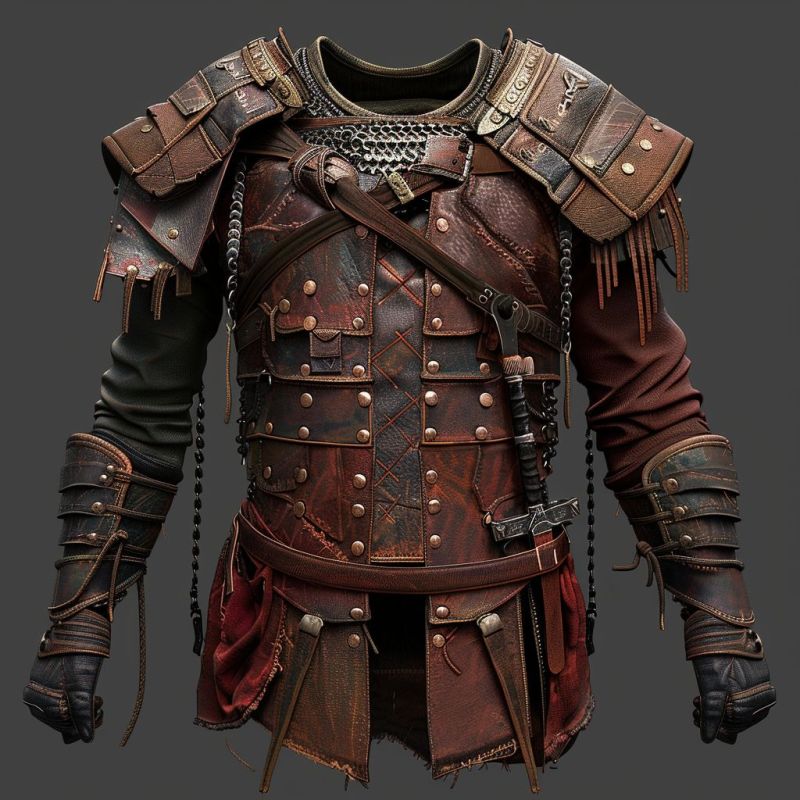
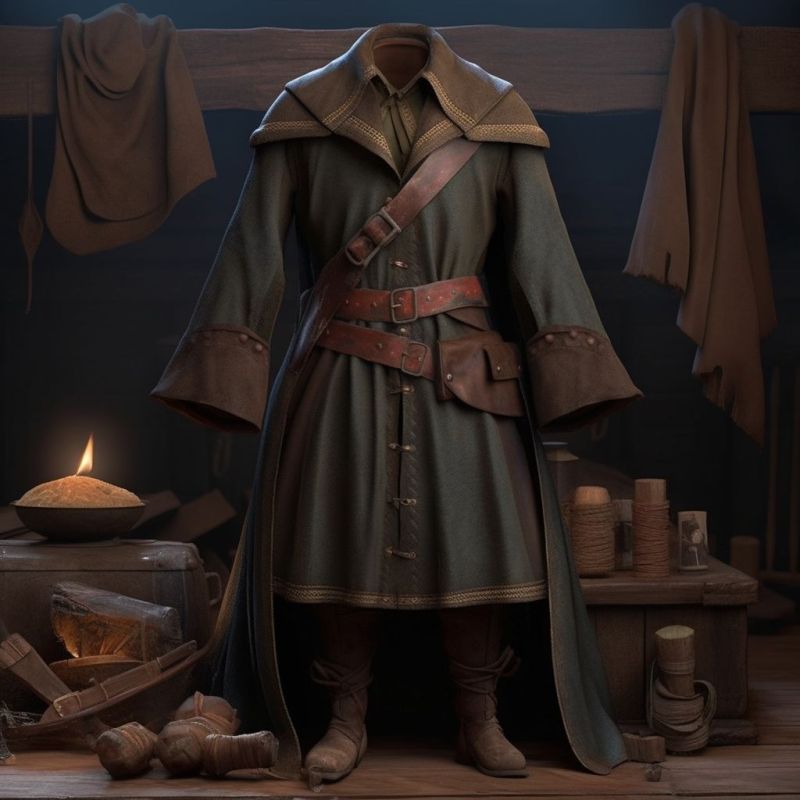
Leather Jerkin32 45 gp
-
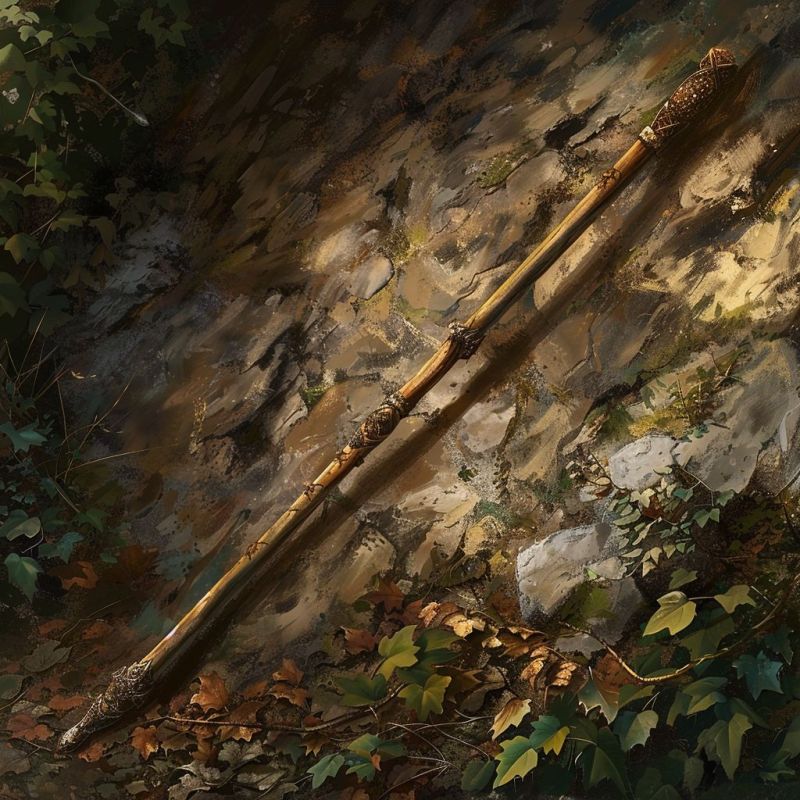
Quarterstaff3.43 0.2 gp
-
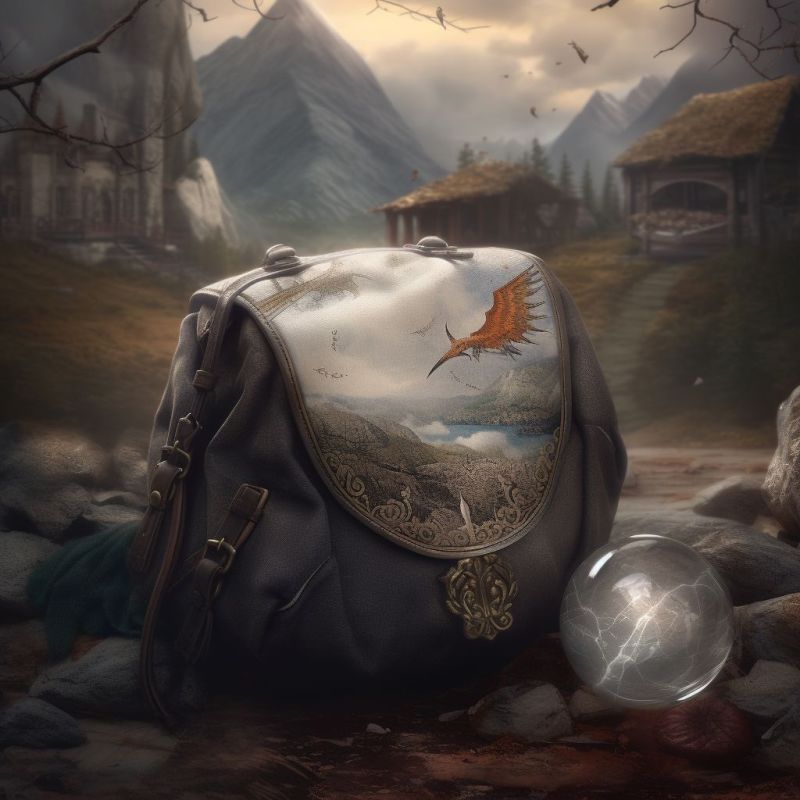
Component Pouch25 gp
-
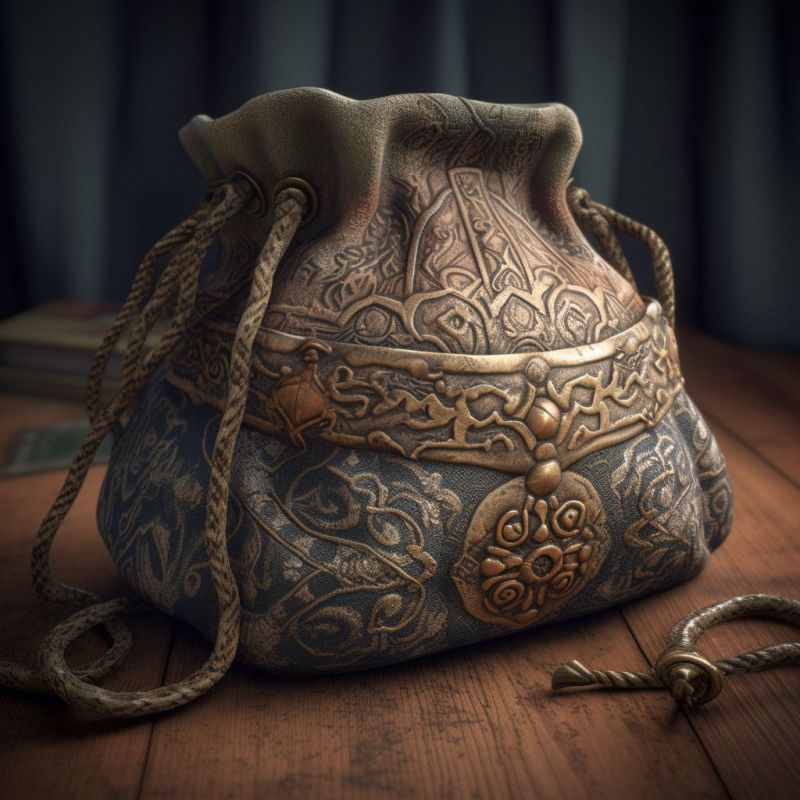
Pouch0.5 gp
-
Clothes, Traveler's2 gp
- Passive Abilities:
-
Druidic Balance1000 gp 1

-
Harmony1
- Abilities:
-
Wildshift (1)1000 gp 1
-
Wildshift (3)2000 gp 3
-
Wildshift (7)3000 gp 7
-
Wildshift (11)6000 gp 11
-
Wildshift (13)8000 gp 13
-
Wildshift (17)10000 gp 17
- Quick Abilities:
-
Subtle Stride500 gp

-
Vault Step15

-
Agile Dodge500 gp

-
Fleet of Foot24.8 1000 gp

- Attack Abilities:
-
Toppling Attack2.26 150 gp
-
Leaping Strike15 300 gp
-
Gale Spin1000 gp
- Reaction Abilities:
-
Whirling Guard300

-
Spellcasting
|
 Spells Prepared:
-
 |
Lash of Rose Thorns
Thunderclap
Sculpt Soil
Sculpt Liquid
Moon Ray
Floral Flourish
Elemental Burst
Druidcraft
Beckon the Elements
Touch of Isha
Caress of Isha
|
Lash of Rose Thorns
Thunderclap
Sculpt Soil
Sculpt Liquid
Moon Ray
Floral Flourish
Elemental Burst
Druidcraft
Beckon the Elements
Touch of Isha
Caress of Isha
-
 |
Anchoring Spines
Absorb and Release Elements
Arctic Arrow
Oakskin
Soothing Wind
Nurturing Wounds
Animal Friendship
Aura of Grasping Thorns
Create or Destroy Water
Cure Wounds
Faerie Fire
Serenity
Restore Plant
Summon Minor Tree Spirit
Quickening Winds
|
Anchoring Spines
Absorb and Release Elements
Arctic Arrow
Oakskin
Soothing Wind
Nurturing Wounds
Animal Friendship
Aura of Grasping Thorns
Create or Destroy Water
Cure Wounds
Faerie Fire
Serenity
Restore Plant
Summon Minor Tree Spirit
Quickening Winds
-
 |
Ancestral Boon
Pass Without Trace
Heat Metal
Enhance Ability
Bestial Vitality
Bestial Stoning
Barkskin
|
Ancestral Boon
Pass Without Trace
Heat Metal
Enhance Ability
Bestial Vitality
Bestial Stoning
Barkskin
-
 |
Claw Eruption
Call Lightning
Bestial Constitution
Cloud of Pestilence
Dispel Magic
Frost Bolt
Insect Cloud
Mass Healing Word
Wall of Water
|
Claw Eruption
Call Lightning
Bestial Constitution
Cloud of Pestilence
Dispel Magic
Frost Bolt
Insect Cloud
Mass Healing Word
Wall of Water
-
 |
Bestial Call
Branch Blossom
Control Water
Dominate Beast
Polymorph
Stoneskin
Summon Giant Constrictor Snake
|
Bestial Call
Branch Blossom
Control Water
Dominate Beast
Polymorph
Stoneskin
Summon Giant Constrictor Snake
-
 |
Churning Whirlpool
Commune with Nature
Insect Plague
Reincarnate
Restoration, Major
|
Churning Whirlpool
Commune with Nature
Insect Plague
Reincarnate
Restoration, Major
 Monster Bits:
-
24 Humanoid Blood0.15 gp
-
62 Animal Bone0.03 gp
-
42 Animal Fat0.5 gp
-
146 Animal Meat0.05 gp
-
20 Soft Skin0.05 gp
Twisted vines erupt from your fingertips, coiling like living ropes around the nearest tree trunk, their bark splitting with a wet crack as sap bleeds into the soil. Leaves unfurl in rapid bursts, green and veined with pulsing energy, drawing moisture from the earth to swell the branches. The air thickens with the scent of damp loam and fresh growth, binding the wild's pulse to your will.
Druid - Tier 2 (Subtype)

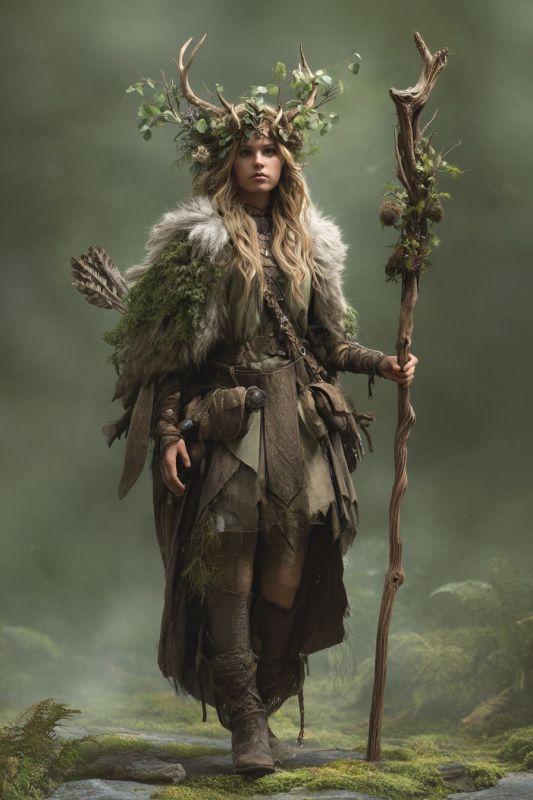
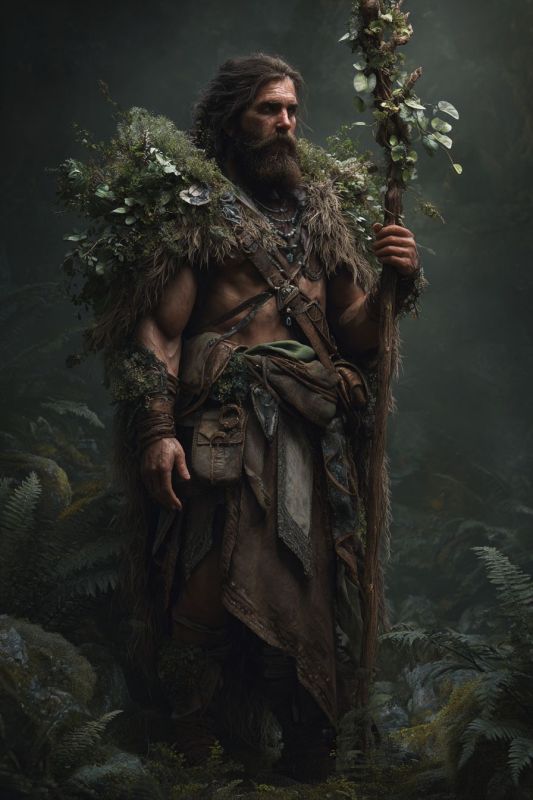
🌿🐾 Druid: Tier 2 Warden
A Tier 2 Druid is a seasoned nature-bound caster whose shapeshifting, environmental magic, and bond with the wild make it a serious force in untamed terrain. It no longer relies only on basic adaptability. At this tier, the druid actively controls space, alters approach routes, and uses beast-forms with greater purpose.
🍃📜 Calling and Foundation
Tier 2 Druids are deeply shaped by circle teachings, sacred groves, harsh wilderness living, or long communion with beasts, seasons, and the land itself. Their connection to nature is no longer just reverent or instinctive. It is practiced, disciplined, and strong enough to hold under real pressure.
🦌🌲 Appearance and Bearing
These creatures usually appear as grove wardens, circle keepers, seasoned wild mystics, marsh guardians, beast-speakers, or defenders of sacred natural places. Their clothing and gear are often layered with practical natural materials—fur, hide, bark, feather, bone, reed, carved wood, and living charms tied to place or season. Their presence tends to feel grounded, watchful, and difficult to separate from the land around them.
🐺🕊️ Combat Style
A Tier 2 Druid fights through flexibility, terrain influence, and timely transformation. It may hinder enemies with roots, mud, wind, or thorn growth, then shift into an animal form suited for pursuit, defense, climbing, speed, or close-range pressure. Its beast-forms are more dependable and tactically useful than those of a Tier 1 Wildspeaker, allowing it to choose forms for specific combat functions rather than basic utility alone.
🧠🌱 Tactical Ability
Its tactical sense is strong within natural terrain, adaptive combat, and local battlefield shaping. A Tier 2 Druid can identify where enemies will slow, where beasts can be directed, and where the land itself can become an obstacle or ally. It is not a grand strategist, but it is highly effective at making forests, marshes, slopes, and overgrowth work against intruders and in favor of its allies.
🦉🔄 Shapeshifting and Nature Magic
At this tier, shapeshifting becomes a defining battlefield strength rather than a secondary trick. Tier 2 Druids can take more reliable animal forms for scouting, mobility, harassment, or direct engagement, and they shift with clearer intent. Their primal spellcasting also gains more practical control value, allowing them to manipulate plants, weather, terrain, or nearby creatures in ways that meaningfully affect the encounter.
🌧️🩹 Defense and Endurance
Tier 2 Druids are difficult to handle cleanly because they can change method as pressure changes. They are still not built to anchor the front line like armored fighters, but they can escape, recover, reshape distance, and use alternate forms to avoid being pinned down. Their endurance comes from mobility, environmental familiarity, and the ability to remain useful even when their first approach is disrupted.
🏕️👥 Common Roles
These creatures are commonly found as circle wardens, sacred grove defenders, deep-wood scouts, marsh mystics, beast-path guides, keepers of dangerous wild borders, or protectors of lands threatened by corruption, poaching, or expansion. In hostile groups, they are often the ones turning natural ground into a hazard while beasts and shifting forms apply pressure from unexpected angles.
👑🌳 Place in a Group
A Tier 2 Druid often serves as the group’s terrain specialist, wilderness controller, or adaptation piece. Even when not the formal leader, it may determine the safest route, the best place to hold, or the right moment to shift from support to direct pressure. Allies rely on it to make the environment matter more than the enemy expects.
📈🍂 Tier Meaning
Tier 2 represents a druid that has developed beyond basic transformation and simple nature magic into real battlefield influence. The core traits remain the same—shapeshifting, primal casting, environmental awareness, and stewardship of the wild—but they now operate with greater reliability, flexibility, and tactical weight. It is no longer just a nature mystic. It is a true warden of the living world.
- Spellcasting |
- Spells Prepared:
-
|
Lash of Rose Thorns
Thunderclap
Sculpt Soil
Sculpt Liquid
Moon Ray
Floral Flourish
Elemental Burst
Druidcraft
Beckon the Elements
Touch of Isha
Caress of Isha
-
|
Anchoring Spines
Absorb and Release Elements
Arctic Arrow
Oakskin
Soothing Wind
Nurturing Wounds
Animal Friendship
Aura of Grasping Thorns
Create or Destroy Water
Cure Wounds
Faerie Fire
Serenity
Restore Plant
Summon Minor Tree Spirit
Quickening Winds
-
|
Ancestral Boon
Pass Without Trace
Heat Metal
Enhance Ability
Bestial Vitality
Bestial Stoning
Barkskin
-
|
Claw Eruption
Call Lightning
Bestial Constitution
Cloud of Pestilence
Dispel Magic
Frost Bolt
Insect Cloud
Mass Healing Word
Wall of Water
-
|
Bestial Call
Branch Blossom
Control Water
Dominate Beast
Polymorph
Stoneskin
Summon Giant Constrictor Snake
-
|
Churning Whirlpool
Commune with Nature
Insect Plague
Reincarnate
Restoration, Major
 Speed:
- Walking Speed: +30
- Swimming Speed: +30
 Special Senses:
- Nightsight: +30
- Inventory Equipped:
-
Leather Jerkin32 45 gp
-
Quarterstaff3.43 0.2 gp
-
Component Pouch25 gp
-
Pouch0.5 gp
-
Clothes, Traveler's2 gp
-
 Extra Attack: +1
- Passive Abilities:
-
Druidic Balance1000 gp 1
-
Harmony1
- Abilities:
-
Wildshift (1)1000 gp 1
-
Wildshift (3)2000 gp 3
-
Wildshift (7)3000 gp 7
-
Wildshift (11)6000 gp 11
-
Wildshift (13)8000 gp 13
-
Wildshift (17)10000 gp 17
- Skill Tier 5:
-
 Attention
 -
 Balance
 -
 Bending Weapon Skill
 -
 Biology
 -
 Druidic Language Skill
 -
 Empathy
 -
 Fortitude 47.23
 -
 Frighten 33.68
 -
 Herbalism
 -
 Hunting
 -
 Influence
 -
 Initiative
 -
 Inspection
 -
Light Armor Skill
-
 Medicine
 -
 Natural Weapon Skill
 -
 Natural Armor Skill
 -
One-Handed Melee Weapon Skill
-
 Psyche
 -
 Sneak
Sneak -
 Willpower


