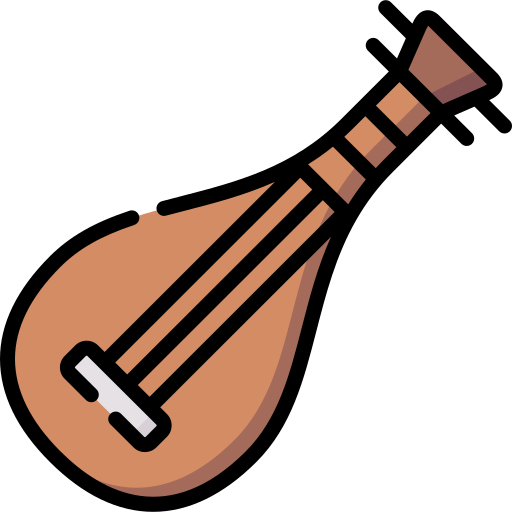
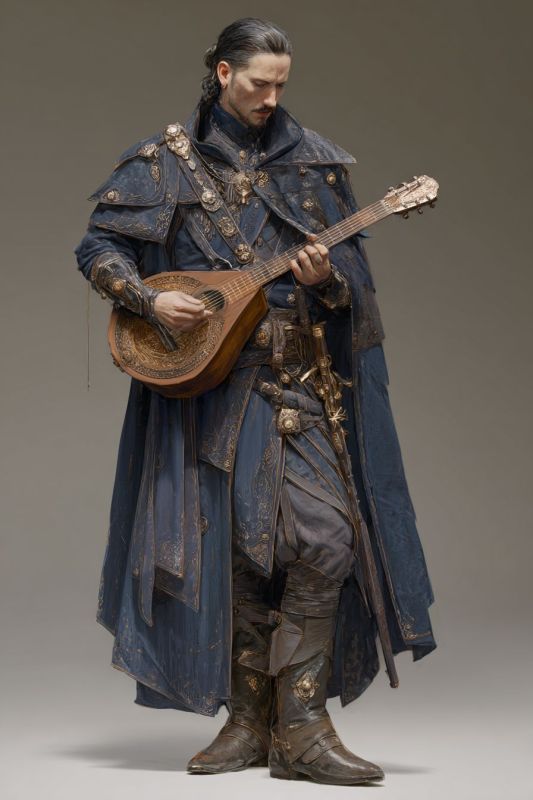
Your fingers dance across the lute's worn strings, coaxing a melody that shimmers like sunlight on rippling water. Golden notes cascade from the air, wrapping allies in warm, invigorating light that mends shallow wounds and sharpens weary senses. The tune fades, leaving echoes of renewed vigor in the crisp morning breeze.
A Tier 1 Bard is a support-focused performer whose charm, musical talent, and social confidence make it a valuable source of morale, distraction, and inspiration. It is not yet a legendary virtuoso or master manipulator, but it is already capable of shaping a fight and a crowd through presence alone.
Tier 1 Bards are trained through travel, performance, oral tradition, courtly service, tavern circuits, or apprenticeship under more experienced entertainers. They are more than simple musicians or wandering storytellers. They understand that words, rhythm, and stagecraft can alter mood, influence action, and hold attention as effectively as any weapon.
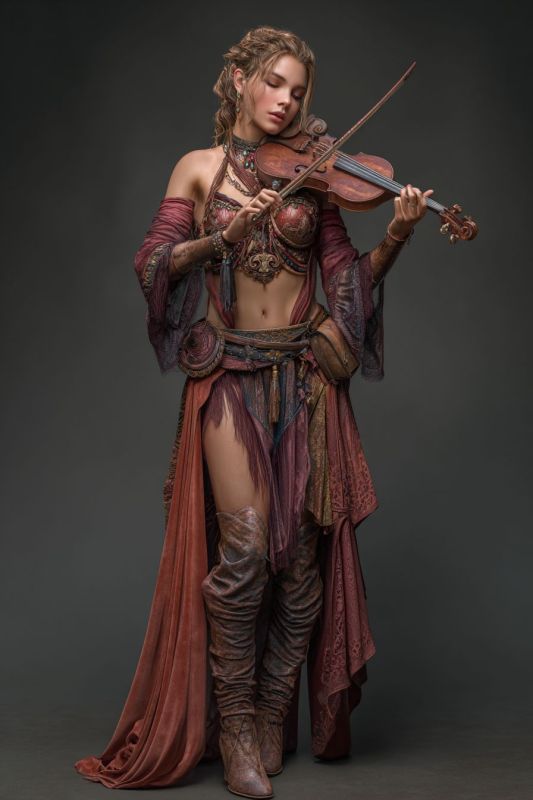
These creatures usually appear as minstrels, singers, traveling poets, street performers, court entertainers, or cheerful wanderers carrying instruments and practical road gear. Their clothing tends to be expressive but functional, often marked by bright fabrics, layered accessories, polished boots, keepsakes from the road, or symbols of past patrons and performances. Their bearing is warm, practiced, and socially agile.
A Tier 1 Bard fights primarily through support, disruption, and morale rather than raw damage. It may inspire allies with music, distract enemies with sharp words, unsettle the flow of battle through rhythm and confidence, or use simple magic tied to sound, speech, or performance. If forced into direct combat, it can defend itself, but its main strength is making everyone around it perform differently.
Its tactical sense is focused on timing, emotional pressure, and social awareness. A Tier 1 Bard understands when an ally needs encouragement, when an enemy is vulnerable to distraction, and when a well-placed performance can shift the tone of an encounter. It is not yet a great battlefield controller, but it is already skilled at improving momentum and keeping spirits from collapsing.
What defines this subtype is active morale control. Tier 1 Bards commonly use song, speech, rhythm, and force of personality to inspire courage, steady nerves, and sharpen group performance. Their influence may be modest at this tier, but it is real. A tired group fights better, moves cleaner, and holds together longer when the bard is doing its work.
Tier 1 Bards are not built to endure through armor or brute resilience. They survive through mobility, awareness, quick thinking, and the ability to adapt socially and magically to changing circumstances. Their strength lies in staying useful from many positions—supporting, distracting, negotiating, or slipping away when direct pressure becomes too dangerous.
These creatures are commonly found as tavern performers, road minstrels, court entertainers, traveling storytellers, morale officers, festival musicians, messenger-performers, or companions attached to mercenary bands and caravans. In hostile groups, they are often the ones emboldening allies, creating confusion, and making a rough force feel more coordinated than it should.
A Tier 1 Bard rarely serves as the main frontline combatant, but it often becomes the emotional center of a group. Allies rely on it to lift morale, smooth tensions, and keep momentum from failing. In many encounters, the bard is the reason a group still sounds confident even after taking losses.
Tier 1 represents the earliest stage of the bard role: charm, performance, inspiration, social adaptability, and support through word and song. The core fantasy is present—music as power, personality as a tool, and morale as a battlefield asset—but it remains grounded compared to the stronger enchantment, broader influence, and encounter-defining presence of later tiers.